


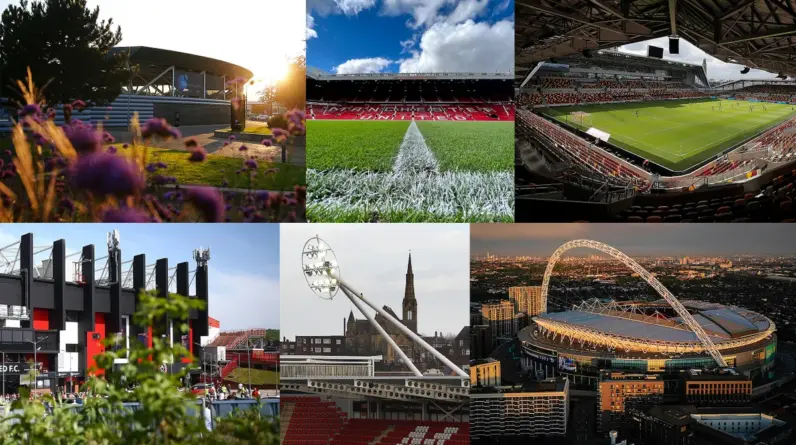
Football isn’t just a sport — it’s a global language. Every cheer, every anthem, every heartbeat in the stands finds its echo inside a stadium. These arenas are not simply concrete and steel; they are monuments of culture, pride, and passion. They hold stories of triumph, heartbreak, and unforgettable moments that define generations. In this journey, we look at the World Cup stadiums that carved their names into history, alongside the modern wonders shaping football’s future.
Legendary World Cup Stadiums That Made History

The story of football is inseparable from the grounds where legends are made. In Brazil, the Maracanã Stadium opened in 1950 with record-breaking crowds, and it later hosted both Pelé’s brilliance and Germany’s unforgettable 2014 triumph. Across the ocean, Wembley Stadium in London became the “Home of Football,” where Bobby Moore lifted the World Cup in 1966 beneath its old twin towers, and where today its soaring arch lights up the city’s skyline. Mexico’s Estadio Azteca carries an even more mythical aura — the only venue to host two World Cup finals, remembered for Pelé’s last World Cup in 1970 and Maradona’s “Hand of God” in 1986. Meanwhile, the Olympiastadion in Berlin, born in 1936 and later renovated for modern tournaments, stands as a powerful blend of historic grandeur and contemporary design. Together, these stadiums are not just places; they are living museums of football’s greatest drama.
Modern Wonders Defining Football Architecture
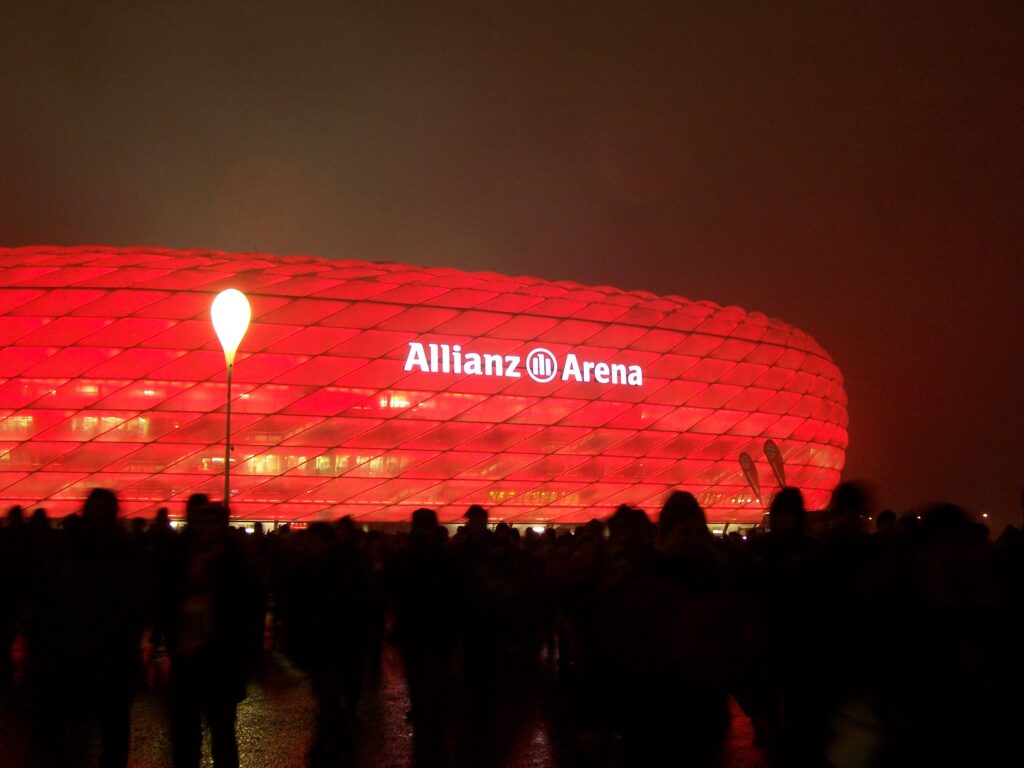
If history gave us grandeur, the present offers ambition and imagination. In Qatar, the Lusail Stadium dazzled the world during the 2022 World Cup with its golden curves inspired by traditional Arab bowls, designed to hold nearly 90,000 fans. In South Africa, the FNB Stadium, also known as Soccer City, became a cultural statement in 2010 with its calabash-inspired exterior glowing like fire at night, symbolizing both tradition and modernity. And in Germany, the Allianz Arena continues to capture imaginations with its glowing façade that changes color, turning every matchday into a spectacle of light. These are not just sporting arenas — they are statements of identity, ambition, and innovation that prove football’s stage can be as captivating as the game itself.
Sustainability in Stadium Architecture
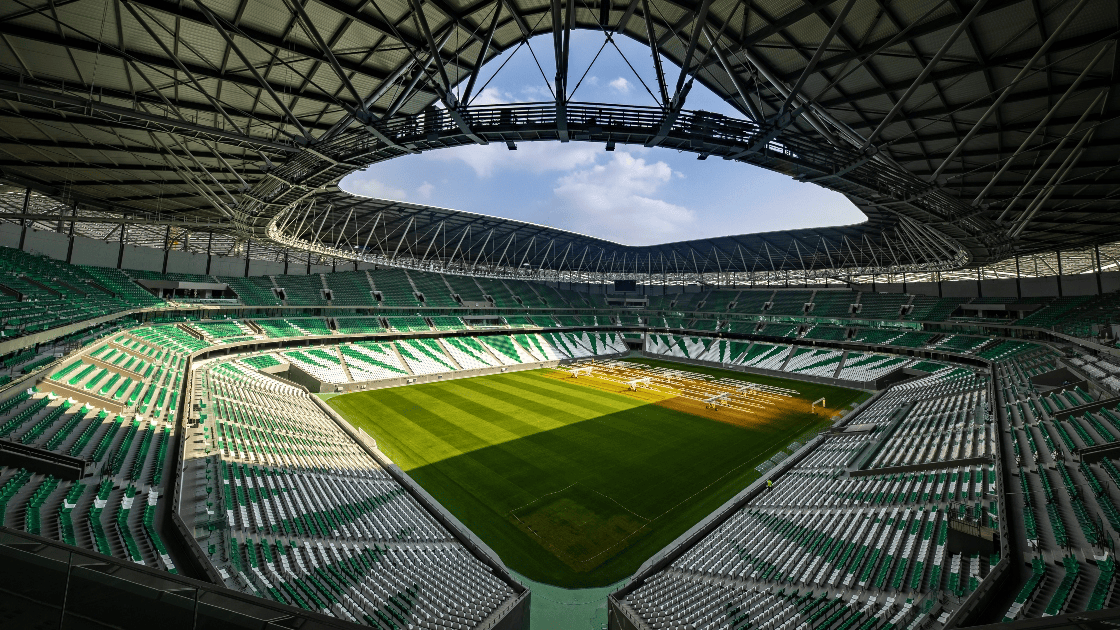
The future of stadiums is not just about size or spectacle, but about responsibility. As the world faces climate challenges, designers are reimagining football architecture with sustainability at the core. The Education City Stadium in Qatar is a striking example, built with recycled materials and equipped with advanced cooling systems while designed to be partially dismantled after the tournament. On the other side of the world, the Mercedes-Benz Stadium in Atlanta is a pioneer in renewable energy use, achieving carbon-neutral status and setting a benchmark for others to follow. These designs prove that stadiums can inspire millions without compromising the health of the planet — a legacy as important as any World Cup final.
How Architecture Shapes the Football Experience
What makes a stadium unforgettable is not only what it looks like, but how it makes people feel. The thunder of chants rolling through stands is amplified by smartly designed acoustics, making every goal echo like an earthquake. Clever sightlines and seating designs ensure that even those in the farthest rows feel close to the action. Technology adds its own flair — from retractable roofs shielding fans from rain to massive HD screens that bring replays to life. In these spaces, architecture and atmosphere merge, turning ninety minutes of football into a memory that lingers forever.
Conclusion
From the roars of the Maracanã to the glowing brilliance of Allianz Arena, football stadiums stand as architectural wonders that define eras. They carry the weight of history, the pride of nations, and the innovation of tomorrow. More than bricks and beams, they are temples of the beautiful game — where design and passion meet, and where every cheer writes another line in football’s story.
