


Modern architecture changed not just how buildings look—but how we live. It introduced simplicity, openness, industrial materials, and a belief that form should follow function. Emerging in the early 20th century, modernism reshaped homes, offices, and skylines—and many of its principles are still alive and evolving today
What Is Modern Architecture?
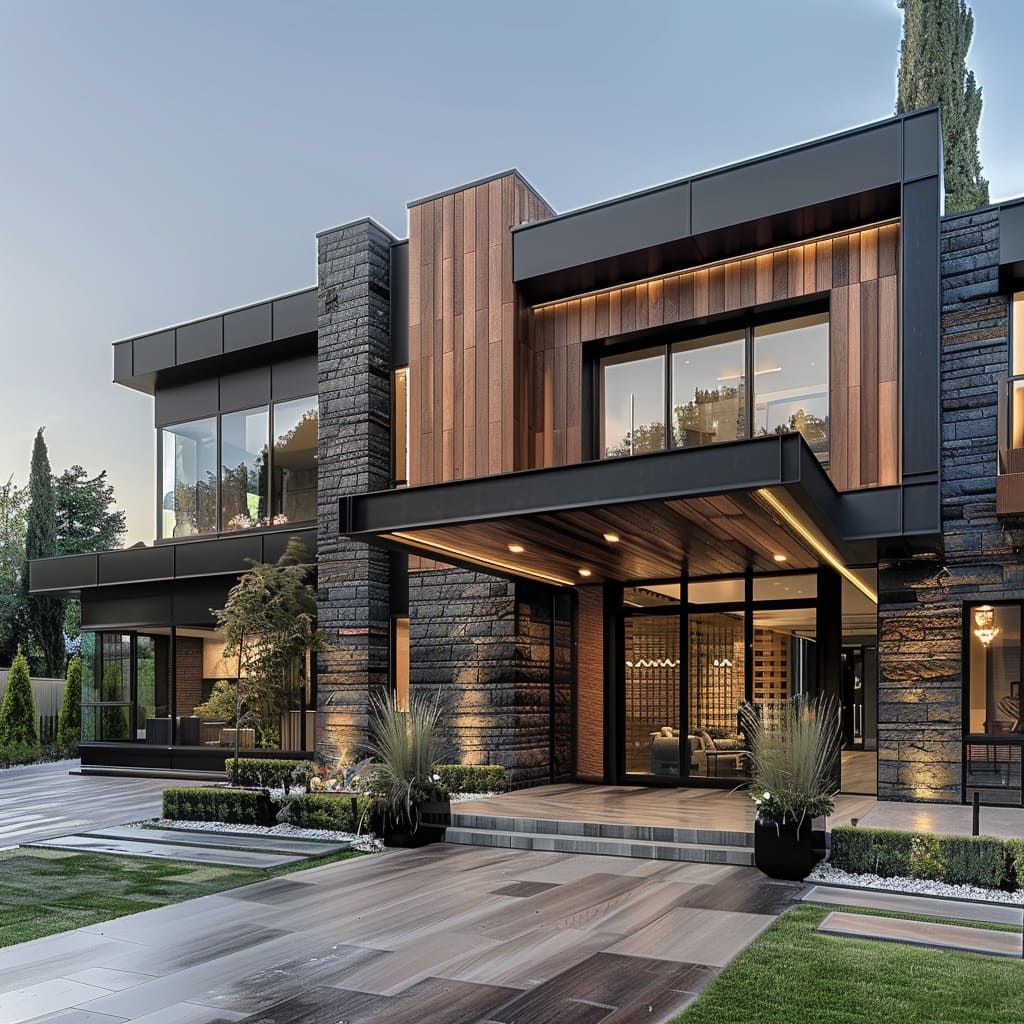
Modern architecture (often called Modernism or the International Style) refers to a design movement that prioritized utility, clarity, and honest expression. Instead of ornament and decoration, modernism focused on what was essential: structure, space, and light. Common traits include clean lines, geometric forms, and an embrace of industrial materials like steel, concrete, and glass.
A Brief History of Modernism
Like all great movements, modern architecture didn’t appear overnight. It evolved through distinct stages, each shaped by new ideas, technologies, and global events:
- Early 20th Century / Pre-1930s: Bauhaus, De Stijl, and Le Corbusier emphasized functionality over ornament.
- 1930s-1950s: The “International Style” rose—boxy glass towers and minimalist homes.
- Mid-Century Modern (1940s-60s): A softer, warmer approach using wood, open floor plans, and iconic furniture.
- 1970s Onward: Large-scale glass and concrete buildings dominated, but critics pushed back, sparking Postmodernism.
Defining Features of Modern Architecture
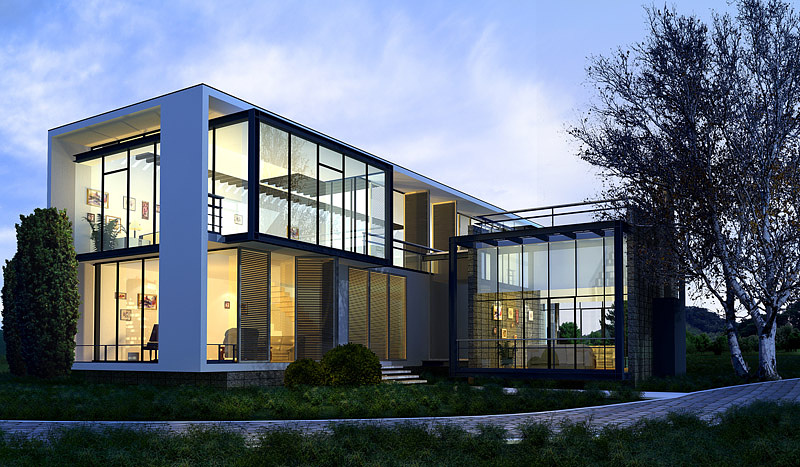
So, how do you know if a building is “modern”? Look for its defining characteristics. These features set it apart from traditional designs:
- Clean, geometric lines that replace ornamentation.
- Open, flowing spaces designed for flexibility.
- Large glass windows to maximize natural light.
- Industrial materials such as steel, concrete, and glass.
- Flat or low-pitched roofs that emphasize simplicity.
- Minimal decoration, keeping the focus on form and function.
Major Types and Substyles
Modernism isn’t one-size-fits-all. Over time, it developed into several distinctive substyles—each with its own look and philosophy:
- International Style – Defined by steel-and-glass skyscrapers, emphasizing simplicity and uniformity (e.g., Seagram Building, NYC).
- Mid-Century Modern – A warmer take with retro details, open plans, and indoor-outdoor living (e.g., Palm Springs homes).
- Organic Modernism – Inspired by nature, blending architecture into landscapes (e.g., Fallingwater by Frank Lloyd Wright).
- Brutalism – Known for heavy use of raw concrete and bold, monumental forms (e.g., Boston City Hall).
Modern vs. Contemporary Architecture
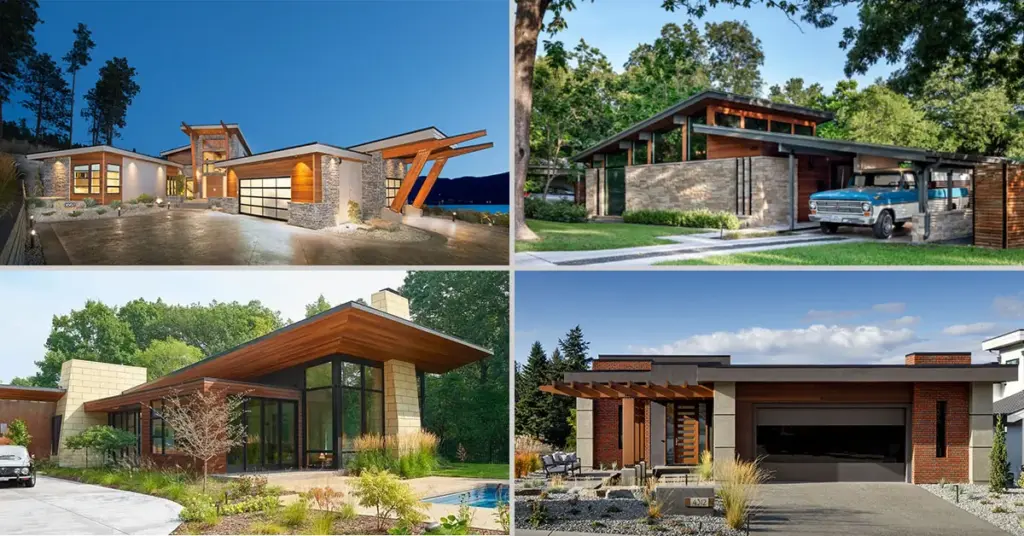
It’s easy to confuse “modern” with “contemporary,” but they mean different things. Modern refers to a historic design movement (1900s–1970s), while contemporary refers to what’s happening now. To make it clearer, here’s how they differ:
- Modern → Historical, minimalist, industrial materials.
- Contemporary → Current, flexible, eco-friendly, often tech-driven.
Famous Examples of Modern Architecture
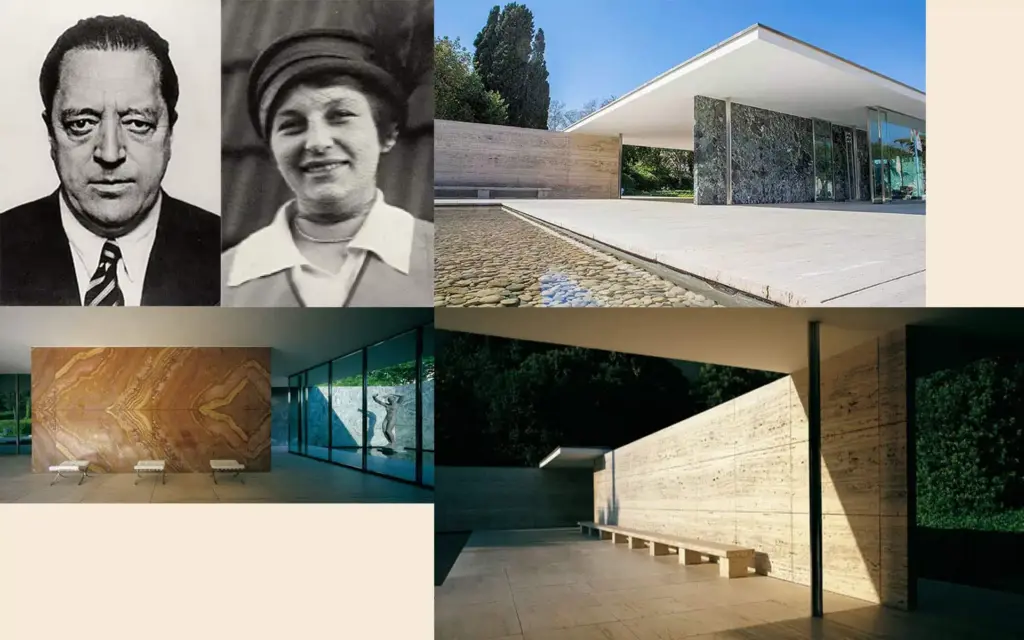
Want to see modernism in action? Here are some of the most celebrated works:
- Villa Savoye – Le Corbusier (France)
- Seagram Building – Mies van der Rohe (New York)
- Fallingwater – Frank Lloyd Wright (Pennsylvania)
- Barcelona Pavilion – Mies van der Rohe (Spain)
Why Modernism Still Matters
Despite being a century old, modern architecture still feels fresh. Why? Because it shaped design around real human needs—light, space, flexibility, and honesty in materials. Its principles also integrate seamlessly with sustainable living today, making it both timeless and forward-looking.
How to Bring Modern Style Into Your Home
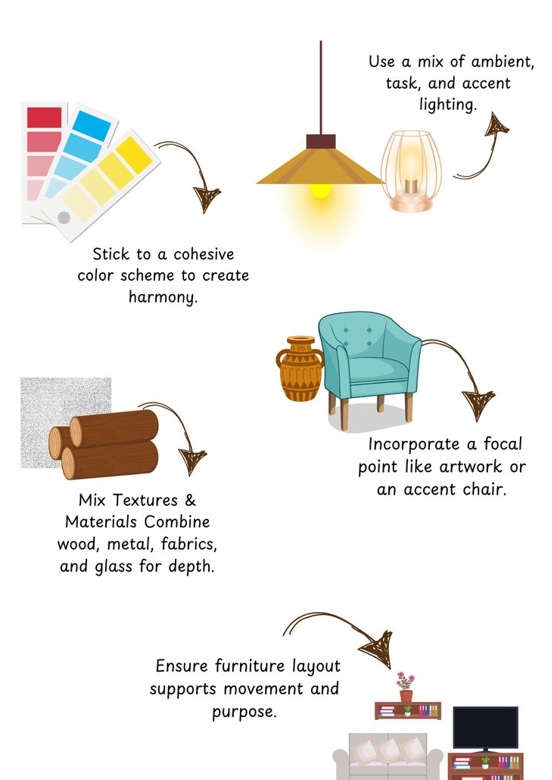
You don’t need to live in a famous modernist building to enjoy its style. With a few changes, you can bring modern principles into your own home:
- Open layouts: Remove unnecessary walls where possible.
- Natural light: Use large windows or glass doors.
- Neutral colors: Stick with white, black, or earth tones.
- Raw materials: Highlight wood, steel, or polished concrete.
- Indoor-outdoor flow: Connect living areas to gardens or patios.
Modern architecture was revolutionary in its time—and it continues to shape how we build and live today. Its beauty lies in simplicity, clarity, and function. Whether you’re gazing at a glass skyscraper or relaxing in a minimalist home, modernism’s influence is everywhere.